
Some people can’t help but create.
For Austin Henry Peer, AKA Dr. Doppler, creation has never been a problem. Whether he’s putting out lo-fi hip hop via Dr. Doppler, playing guitar and singing in Ray Gun Tony or painting and drawing, Peer has always been a prolific artist.
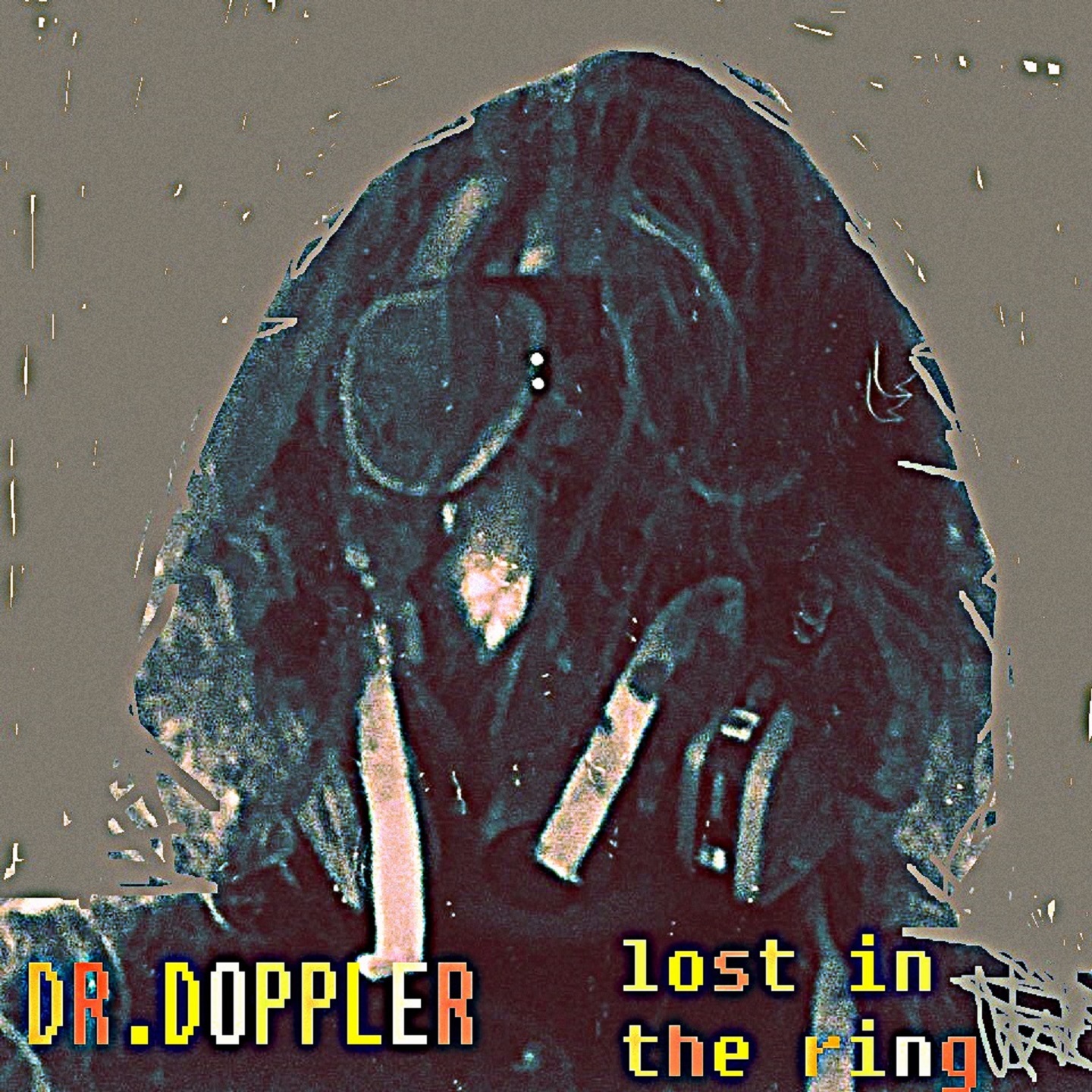
Peer revisits Dr. Doppler with his latest beat tape, “Lost in the Ring,” continuing his impeccable consistency, with the collections’ sonic elements and vibe-able rhythms mirroring that of past releases. That’s not to say that his sound hasn’t continued to progress since the project’s inception, it’s just that when you hear one of Peer’s songs, you can tell it’s his work.
The 16-track release is jam-packed with obscure vinyl samples, synths and drum loops that are sure to keep your head bobbin’ throughout the entire 28-minute tape.
Take the track “bit by bit”, for example. The beat tangles you up in an intricate loop of drums and samples, only to bring you out on the other side with a smooth synth line and chopped vocals. The rhythmic tension resolves with an atmospheric vibe, two components deeply rooted in the Dr. Doppler projects.
While Dr. Doppler’s compositions stray from mainstream hip hop production, tracks like “every man’s a boy,” embody a Late Registration-type aura, in sample choice, only to bring you back into the Dr.’s lab as the beat progresses.
Peer, in the form of Dr. Doppler, pays homage to his home state of New Jersey on occasions throughout the tape. “bit by bit” begins with a man saying, “We take you to New Jersey,” and the Garden State is reference in the title of the track, “new jerzatory”, perhaps an ode to Peer’s home studio (or an allusion to the state being a sort of “purgatory” for the artist).
Whatever the relationship with his home state, the sound Dr. Doppler creates is far more “upstate New York” than “The Sopranos,” possibly due to Peer’s college years at Alfred University. Peer states genres such as vaporwave to be an influence on the Dr. Doppler project, embodying components of ’80s and ’90s nostalgia and aesthetics.
Peer answered some questions about his latest release via email, below:
Chase Montani: When did the Dr. Doppler project start and what was the initial inspiration?
Dr. Doppler: Let’s see. Well in 2012 I got my first sampler, the Roland SP555, which is when I simultaneously received my Ph. D, lol! I was just Doppler before, but the idea of sampling, and the sampler itself, flipped the entire process of music making on its head for me. Now, instead of sitting in front of a synth and drum machine trying to write completely original music, I was now searching, and more importantly, researching. I think any producer or beat maker would compare sampling vinyl to surgery, even though most of us have never performed one. So basically it was this idea of a “beat surgeon” and the experimental quality of the music that made the whole “doctor,” or more appropriately, the whole “mad scientist” theme make sense to me.
Montani: Can you take me through the process of creating a Dr. Doppler song?
Dr. Doppler: The process of making a Dr. Doppler track varies from track-to-track, and even more distinctly, from album-to-album, what ever you wanna call it. But basically, whether it be a single hit of a drum, or a synth intro, or whatever really, it all starts with vinyl. 95% of the drum sounds come from sampling records, whether I chop up a break or I build a kit bit-by-bit. Once i have a kit (or two or three), I’ll start looking for the meat. Sometimes I’ll spend hours looking for something to loop or chop, but I usually wait for something to catch my ear, trying not to force it.
Once I find something that works, I’ll play around my samples, literally. I’ll tap out my drums and “meat” samples till I find a groove or a direction to go in, and then I sequence it so it stays quantized, and more seamlessly changes from part-to-part. All of this is done on the samplers and at this point the beat is basically what it’s gonna be.
Then the addition of scratching or more percussion or a synth line or a dialog sample moves the process forward and provides me with better sense of context, and guides my decision in what to look for next. When it comes to other melodic samples though, it can really take awhile, although, sometimes, if you’re really lucky, you pull something out and it just works first try, like Dilla’s watching over you or something.
Montani: What kind of hardware/software do you use to produce these tracks?
Dr. Doppler: The full list of equipment is included with the album description on my Bandcamp but the stars are: SP202, SP404, a Tascam tape recorder and the Yamaha PSR-32 (thrifted keyboard), oh and a bunch of vinyls!
I use Audacity to get the digital recording, which is blasphemy to some, but I try to rely on the computer as little as possible.
Montani: You’ve had an uncanny consistency in your music for as long as I can remember. How do you continue to produce music that sounds so fresh, while keeping within your trademarked sound?
Dr. Doppler: Yea I don’t know about that. I actually kinda have thought about that too, not to sound pretentious. But really the sound has always been similar weirdly enough, like even before i started sampling, or sampling vinyl more specifically. But I think the real answer is that, I’m me, and it doesn’t matter whether I’m chopping up Dizzy Gillespie or playing a Casio or guitar or sequencing drums, it’s the influence of the hand, or better yet the mind, on an idea that gives it value and allows for “authorship,” in a sense. And I mean that generally, I think that idea applies to anyone sampling or “plundering.”
Montani: Any music/outside entity in particular that influenced “Lost in the Ring?”
Dr. Doppler: I guess there was no over-arching influence on the album other than the music that I like and strive to create music similar to.
But MF Doom and Black Moth Super Rainbow are two huge influences on me in general, but they also directly influenced two tracks on this beat tape. The first being track 8, ode2bmsr ,where I really tried to emulate the BMSR sound, but with some of my normal sampling techniques, like snagging a drum bream and scratching in the background.
With track 4, weather fingers, I sampled John Lucien’s “Maiden Voyage,” which MF Doom, as Metal Fingers also sampled, hence the play on words.
Other than that, the influences are more broad. I think anyone making lo-fi hip hop will tell you that someone like Eevee or bsd.u has been extremely influential because, personally, I feel they’ve really shaped the genre into what it is right now. Honestly even just the ideas and essence of lo-fi hip hop has influenced me, and honestly vaporwave stuff as well. Both being sample based genres with a new twist, they’ve really validated what I’ve been trying to do as they’ve grown over the last few years.
Montani: Being that you’re creating lo-fi hip hop beats, are there any plans to collaborate with rappers of MC’s in the future?
Dr. Doppler: Collaborations! Collaboration is something i really encourage with the Dr.Doppler stuff, although it’s hard to find people who are feeling it enough to actually lay stuff down. I’ve been working with this guy, Clyve Lewis, for a couple years now and every once in a while we get something out. He just made a video for a track we made together called “Poppa Sam.” In the future though and with this release, I really hope to expand my collaboration Rolodex!
“Lost in the Ring” is available for free on Dr. Doppler’s bandcamp. Connect with the Dr. on Facebook, Instagram or Soundcloud.
Leave a Reply